Have you been tangled in the web of the Reading War? Did you know, many parents and educators have found themselves in a literacy conundrum? Is this true in your case? Despite having invested countless hours reading with your little learners, do you still struggle to master teaching them the art of reading or achieving early literacy? If you answer ‘yes’ to these questions, you may be engaged in something far deeper than you realised—you have been thrust into the conflict of the Reading War and unconsciously taken a side without questioning it.
What is the reading war
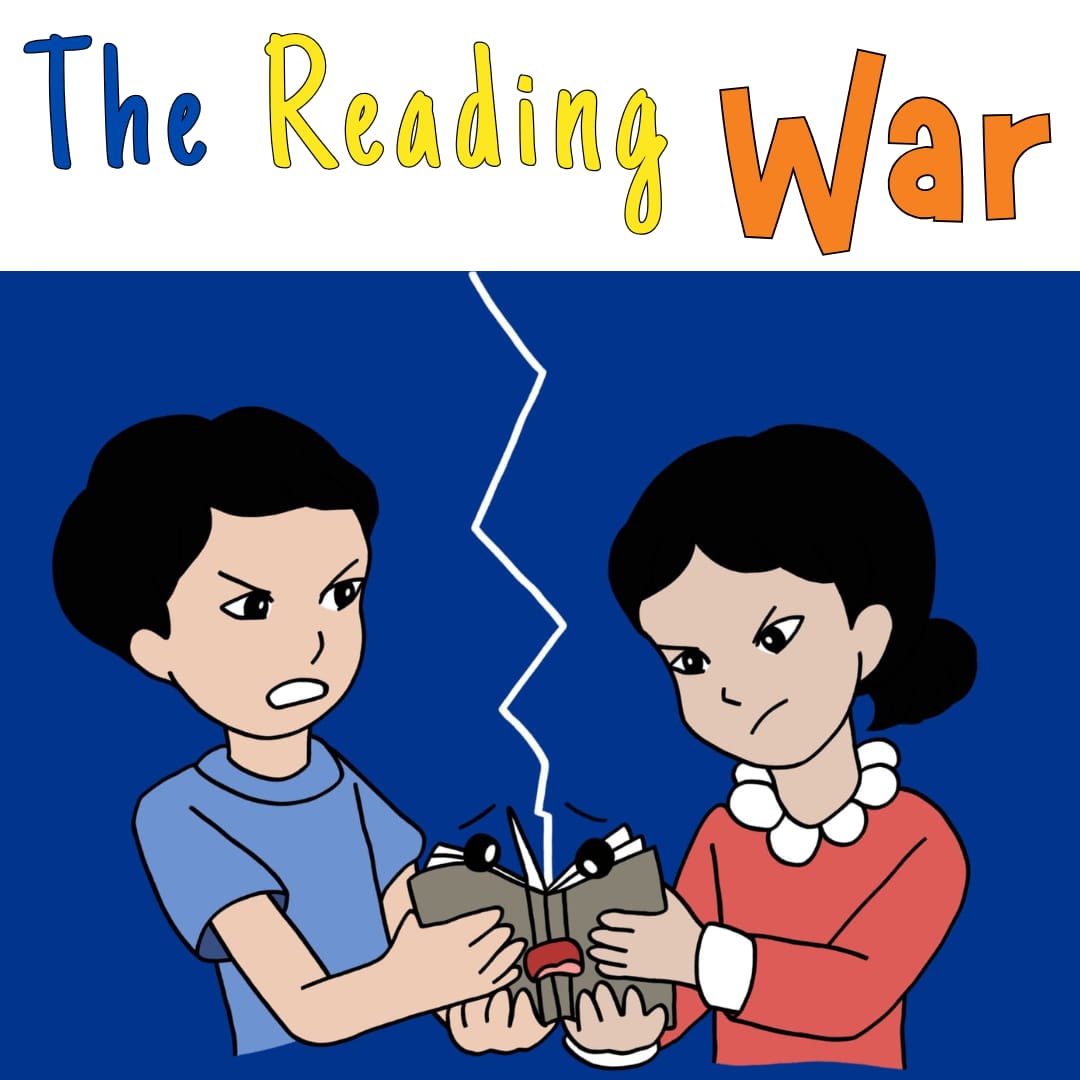
The Reading War is a long-standing debate about two pedagogies: phonics-based instruction vs whole-word approach.
What is Reading?
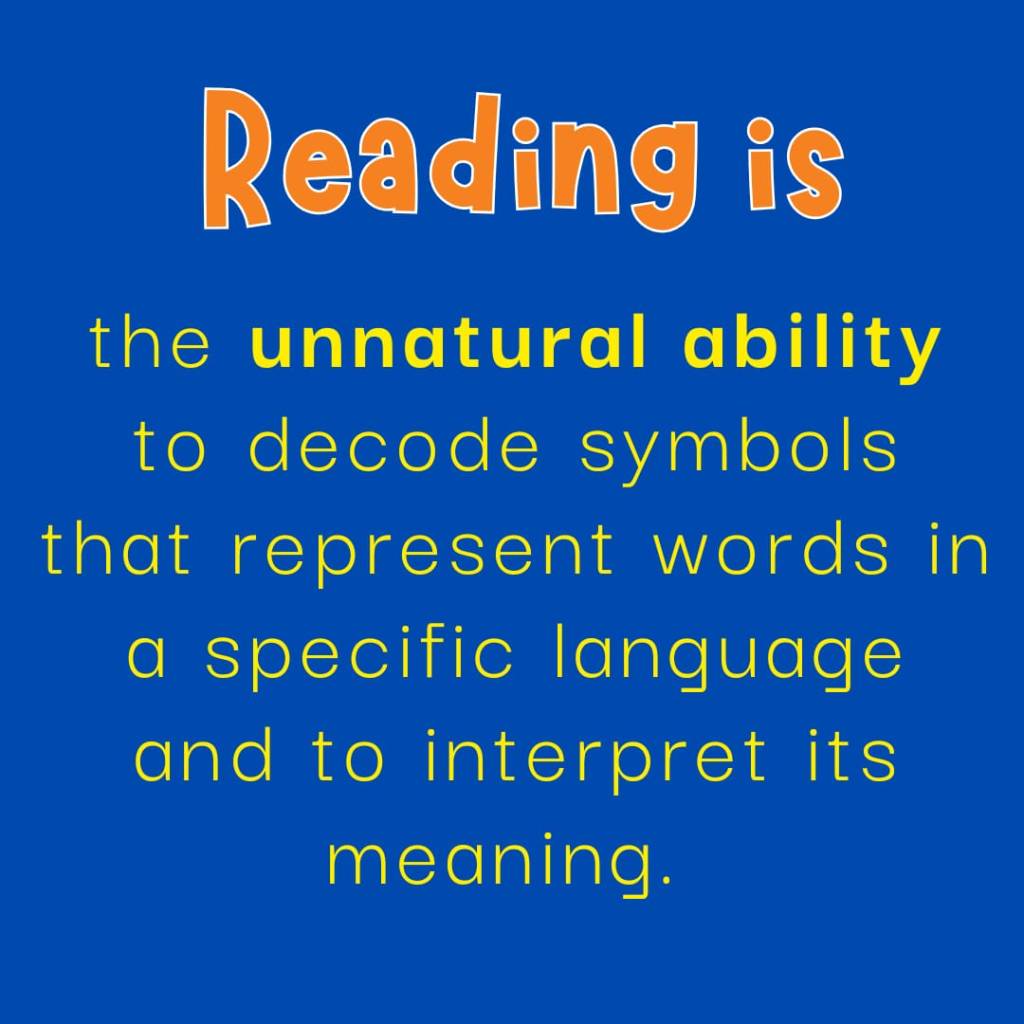
In the English Language, our symbols, ‘26 letters’, consistently capture our spoken words. Each symbol codes one or more sounds with specific rules. For example, the words tap and tape are decoded differently. Both have three sounds but three and four symbols respectively. Each has the same initial and final sound but different medial sounds based on the rules. Finally, each has a different meaning. The ability to read is complex. Decoding the symbols is the single most basic step to reading. Yet many learners struggle to master this fundamental step.
Take for instance, Aleysha Ortiz, a 2024 graduate from Hartford Public Schools in the US. She graduated from high school with honors but can’t read or write. Now she’s suing, according to an article posted by CNN on February 27, 2025. In Ayesha’s own words, when asked if she can read the passage from the book, “It’s impossible. I just see these words everywhere…with no meaning.”
That’s it, if symbols cannot be decoded, learners will not be able to interpret these symbols, commonly known as comprehension. Have you chosen sides in the Reading War? Or is being neutral worthy?
The whole-word reading method
Have you been pointing at words, telling students to repeat after you, expecting, or at least hoping, they miraculously remember the whole word, or multiple words, a few moments, days or even weeks later? Then, you have been practising the whole-word approach to reading. You have been expecting students to memorise words, each symbol that codes for each word. Imagine the stress, the chaos of memorising the symbols in each word one by one, word by word, not knowing why each symbol is where it is, or how they are combined to form each word.
This approach might look successful on the surface as little learners might regurgitate several words, masquerading as being literate, but when confronted with a word with similar rules, they might struggle to miraculously read it merely because they were never truly taught to decode the code, ultimately distracting the aim—being able to read with understanding.
Let’s face it, if we are unable to read accurately, comprehension will be lacking. And we all know the bottom line to reading is to understand what we’ve read. If you are big on the whole-word reading—creating sight-word babies, then stop to ask yourself this question: Have I been setting up my little scholars to become frustrated readers or functional illiterates?
Phonics-based reading method
Contrary to the whole-word reading approach, which became popular in the early to mid-20th century, the phonics-based reading approach predates it, with records tracing back to the 16th century work from John Hart, an English writer who proposed that reading should be taught by focusing on symbiotic relations between letters and sounds.
Over time, many high frequency words become a part of their sight words as the brain understands the letters that code the words. Here, you have taught students the single most fundamental skills to pave reading. Your little learners will not be stuck in a loop of frustration, the breeding ground for the literacy crisis. There is no wonder that countries like the US, UK and others are undergoing a resurgence of Phonics-based reading ignited with the Reading Science. Are you one of the few choosing the long ride, mapping out your Phonics instructions, sticking to the old golden method?
The phonics-based reading method is more systemic and explicit. Teachers find themselves directing different Phonics skills and stitching it together to reduce the early reading chaos. Early readers start to practise mapping sounds to their letter symbols, isolating different positions of sounds in concrete words such as bat, table and butter, before blending two-letter words or simultaneously blending two and three-letter words. Next, these little learners start to graduate to three-letter words and rhymes before exploring advanced Phonics skills like Phonics rules, complex sounds and graphemes, suffixes, prefixes, roots and so on. Either way, the Phonics-based reading approach is grounded in how our English language has evolved over time, providing readers with the skills to decode the language code sound by sound, rule by rule. Thus, lowering the burden of memorising each word.
Is it important which side you choose?
Perhaps you have not chosen a side, conceding to practising both methods. This however, can only set your little learners as casualties of the Reading War. It’s important to understand the whole-word and phonetic approach so that you will be better equipped in making, not just an informed decision, but one that can affect the future reading success of your little learners.
The solution lies in ciphering the code to reading. The phonetic approach can help you decipher that code. Consider: If we use the whole-word approach to teach young learners to read rapidly, then they might fall through the cracks as they advance in the education system, since they will be expected to memorise more words as they move along. On the other hand, if we go slow and start by teaching explicit Phonics, they might appear at first to be left behind when compared to their younger counterparts, but later these ‘slow horses’ will be positioned for further literacy success with ease, being taught how to unlock the reading code.
What do you think? Which side will you choose? The reading success of your little learners ultimately depends on that choice.
If you’d like to find out more about how My First Big Workbook of Sounds series can help your little learners, you can send us a message here. We would love to hear from you!
Who we are
We are the first self-made STEM and STREAM educational content creators for little learners to discover the joy of learning through fun, hands-on, and powerful thought-processing activities from our workbooks and PDF printables.
Our Mission: To create masterful little minds with 21st Century skills by encouraging creativity, reading readiness, exploring new skills, analyzing and applying learned concepts, think critically, and engage in learning for fun.
 Early Learners Bookshelf Publishing