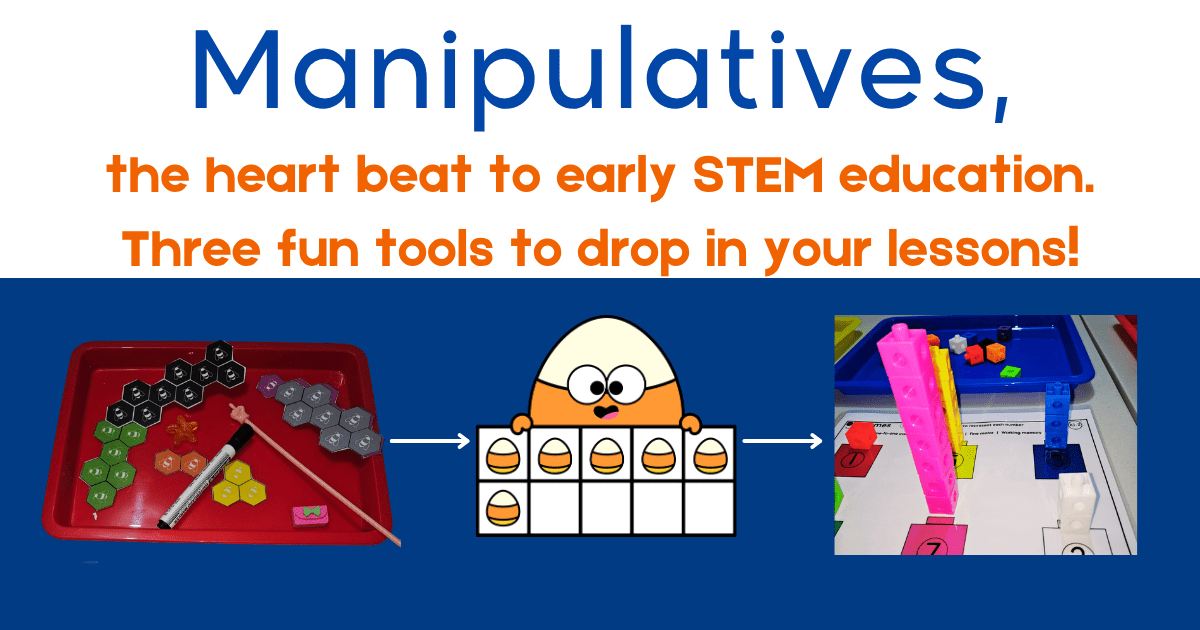
Maths is perhaps one of the most challenging early years skills to master for little learners. It’s the little ones’ ‘big trouble’, and no wonder—it’s as abstract as learning concepts get. But it doesn’t have to be. Here are three fun tools that early childhood educators can use to crunch the numbers and build strong Maths literacy.
BEEHIVE MATHS
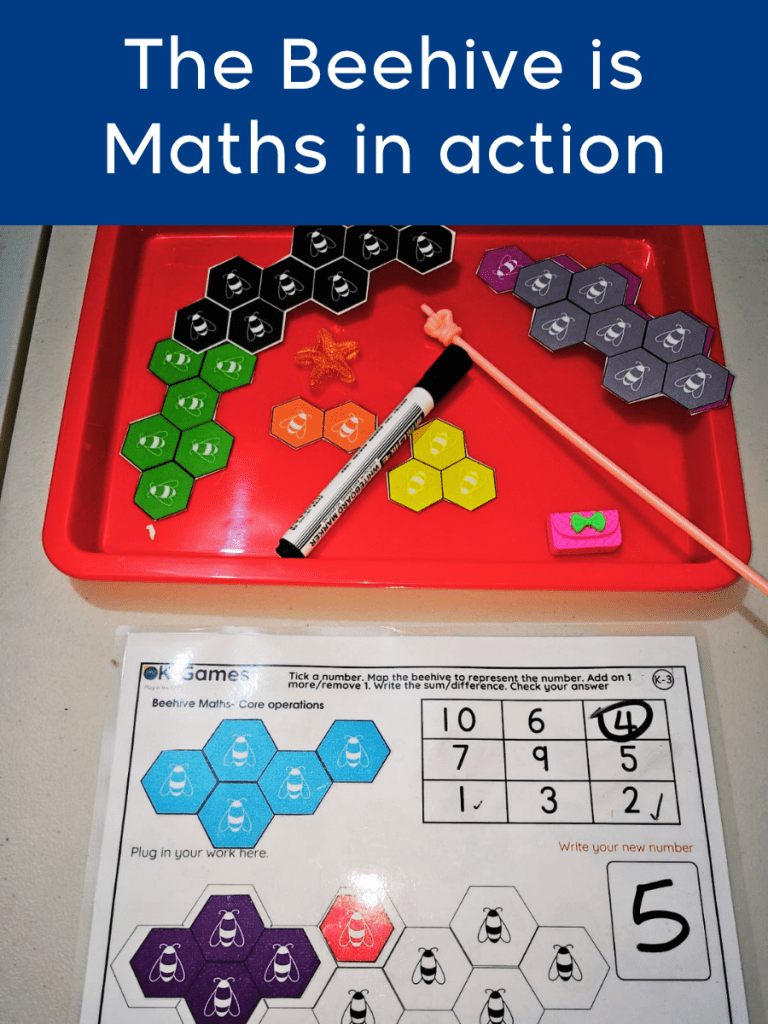
A mathematical implement that sends little brains into action mode. In the Beehive, children learn an explicit rhythm of one-to-one correspondence of numbers and then work their way to advance Maths concepts: addition, subtraction, more, less, composition and decomposition of numbers. Our number system is built on base ten, as such, in the Beehive, a number is represented by honeycombs, each carefully crafted by a colour, shape, pattern and the workers of the hive—honey bees.
How does the Beehive solve multiple of your Maths problems?
The Beehive is Maths in action. Take for instance, the number four. It is represented by four honeycombs stuck together as seen in the image above. This specific honeycomb set has the colour purple, and to its top, has four working honey bees. There is no room for errors as each component complements the other. A symbiotic system weaves into the brain creating concrete experience for the concept ‘4’. Children no longer need to count in the disorganized representation of quantity. They can work on building the base ten system, chaos free.
Students can take this a step further; they can fact check their own responses or expressions of each number by: recalling the colour; 4 is represented by purple, it has four honeycombs, it has this specific shape, it has four working honey bees.
But does it stop there? No, imagine asking a student to manipulate honeycombs to make sets of four. Little hands dropping honeycomb 3 over honeycomb 4 and suddenly the brain sparks, they have discovered that they only need that 1 red honeycomb to complete the set! They could go one step further: right there, your little mathematicians could write their own simple equation. They can look at their own actions and record their own conclusions: 3 and 1 is 4.
THE TEN FRAMES
This is perhaps a teacher’s favourite. It’s simple, organised, and teachers can use anything to represent a number on the ten frame. Students could use rice grains, bottle covers, water drops, crayons, building blocks and so much more to express a number on the ten frame.
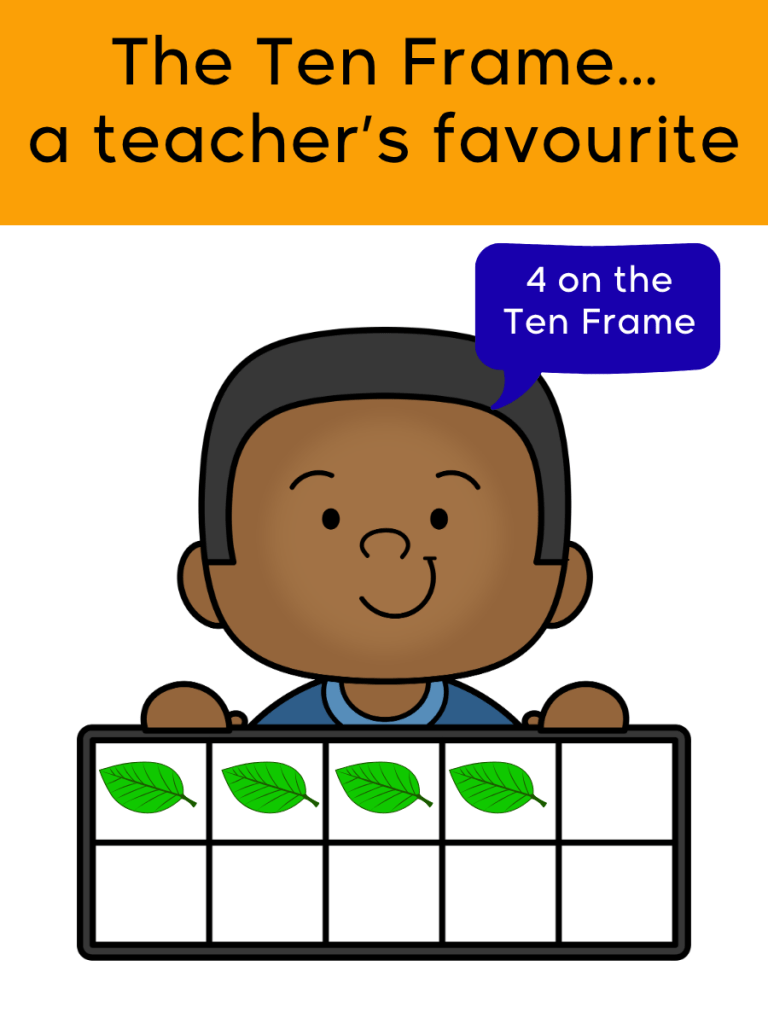
Let’s now increase the fun! Have students roll little balls and place them on their ten frames. Next, whichever number is your focus, have them pop up to show that number.
The Ten Frame Maths is a powerful tool to teach one-to-one correspondence, addition, subtraction and comparing numbers. It is easy to follow, and many classrooms have already been using this kids’ friendly tool, creating STEM opportunities for little learners in Maths.
SNAP CUBES MATHS
Like the Beehive and the ten frames, snap cubes are represented by base ten. There are 10 colours and 10 of each colour cubes snapping together to make 100 snap cubes. It is the base manipulative for little engineers in early childhood. Teachers may use them to express one-to-one correspondence, addition, subtraction, more, less, same, different, colours, shapes, measurements, graphs and the next best thing—building to express concepts.
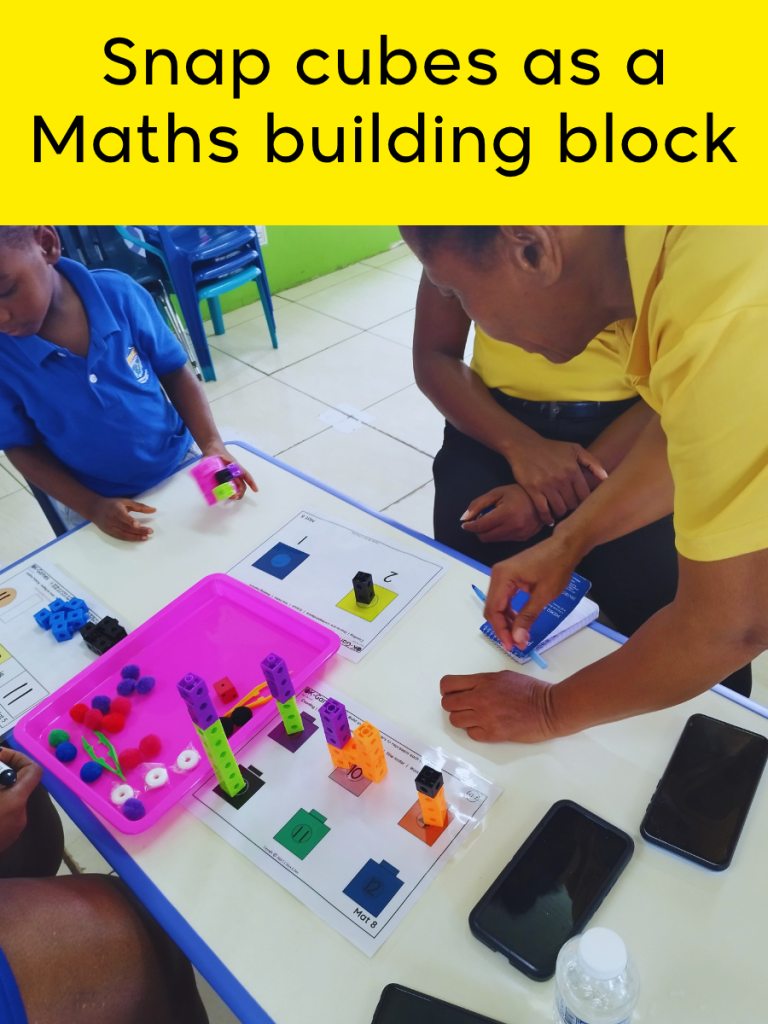
How can snap cubes be used to bring out engineering skills in STEM?
Children may use the snap cubes to build the actual number they are learning about e.g., building a 3D shape of number 3 or lowercase letter p. If guides are provided, students may use them to build 3D shapes and later graduate to building structures, plants, animals, and different types of transportation.
How else can we use snap cubes?
Snap cubes can easily and accurately be used to measure distance and make comparisons in measurements. They can be used to teach and explore non-standard units of measurement. It can be a world of inclusive fun by having students snapping away to measure the length or height of their pencils, books, drink bottles, leaves and shoes. The possibilities are countless as this manipulative will facilitate learning through play or getting hands-on. This will create more learning opportunities for teachers to expand students’ learning outcome, demonstrating to students that they must start measuring at one point to the next in order to get accuracy. There goes another STEM Skill being scaffolded through manipulation.
Snap cubes as a Maths Building block
It doesn’t end there. Snap cubes are your building blocks to early Maths. They can be used to introduce numbers, addition and subtraction in action, identifying positions, colours, sets, grouping and regrouping, creating 3D tables and bar graphs, sequences and patterns, and let’s not forget, shapes. Aren’t the possibilities endless?
Are you ready to include these top manipulatives in your classroom routine?
If these fun manipulatives and methods are something that you would like to implement in your classroom to ‘STEM it up’ or to enhance your Maths sessions with your little learners, My First Big Workbook of Maths Ages 3, 4 and 5 have included these tools to help students enjoy their Maths journey, while lifting the heavy planning and designing weight from the teacher. You may also opt to sign-up for ELB’s premium ready-to-use digital worksheet bundles at a teacher friendly rate.
If you would like to receive monthly updates on our learning tools and the new resources we are always creating, sign up for our newsletter. Click here.
 Early Learners Bookshelf Ltd.