Many early childhood students struggle to master this fundamental literacy skill—Decoding. But how do we know if our students have mastered this skill that will later prepare them for real reading readiness? Ask yourself these four elementary questions:
1. Can my students translate phonemes to graphemes?
2. Can my students isolate the position of sounds in words?
3. Can my students blend two, three, or four-letter words?
4. Are my students able to substitute letters to build new words?
If you have answered no to one or more of these questions, then this blog is definitely for you.
What is Decoding?
The ability to manipulate and blend sounds to read words is perhaps the most basic literacy skill that translates to early decoding mastery. Once mastered, students will ease into word patterns, rules and exceptions, to decoding words if they are taught explicit Phonics instructions. Later, students will develop reading fluency as decoding skills have been mastered.
Why is phoneme-grapheme mapping so important?
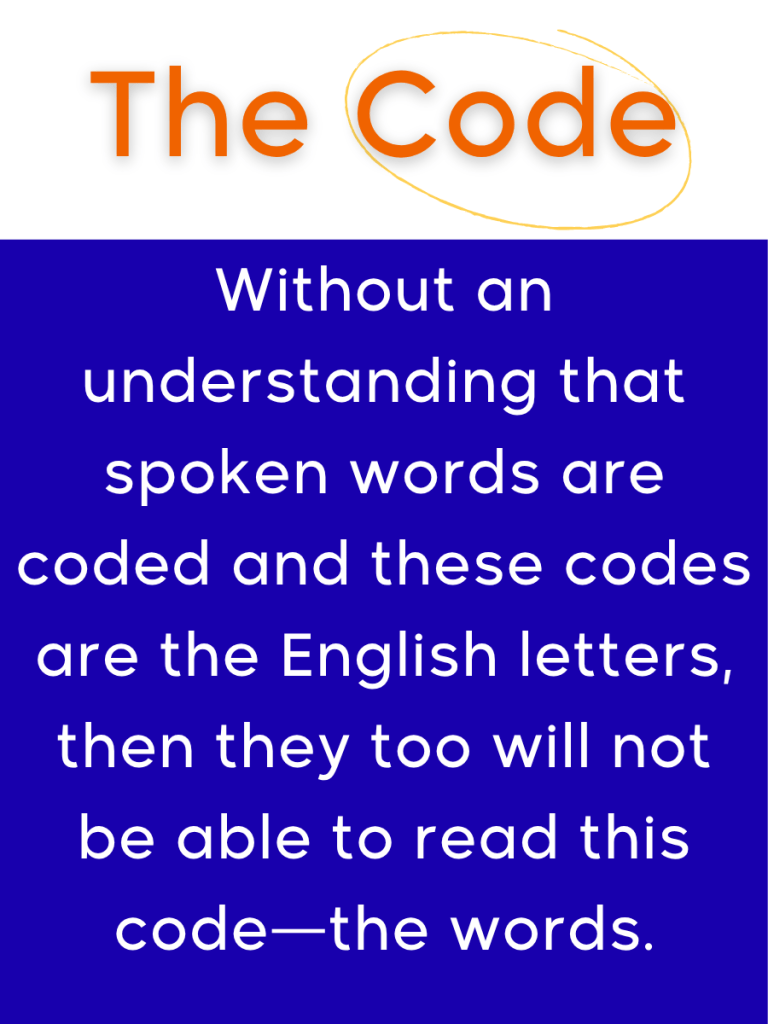
Imagine being given a foreign language with unknown letters to read? Would you be able to read it? The same must be considered for little learners or any beginning reader. Without an understanding that spoken words are coded and these codes are the English letters, then they too will not be able to read this code—the words. In early childhood, we must introduce sounds and map them to their symbols, one sound at a time. Here, practitioners create multiple opportunities to introduce, practise and apply new and old sounds. It could be a 1-minute sound drill during Circle Time and later pick it up during Guided Learning, to introduce the letter or letters that could be used to express that sound. Always remember, it takes time, discipline, repetition and consistency for it to become a habit. We must never expect students to read a code we have never taught them, or lack explicit, continuous, and strategic instruction.
What is Sound Isolation?
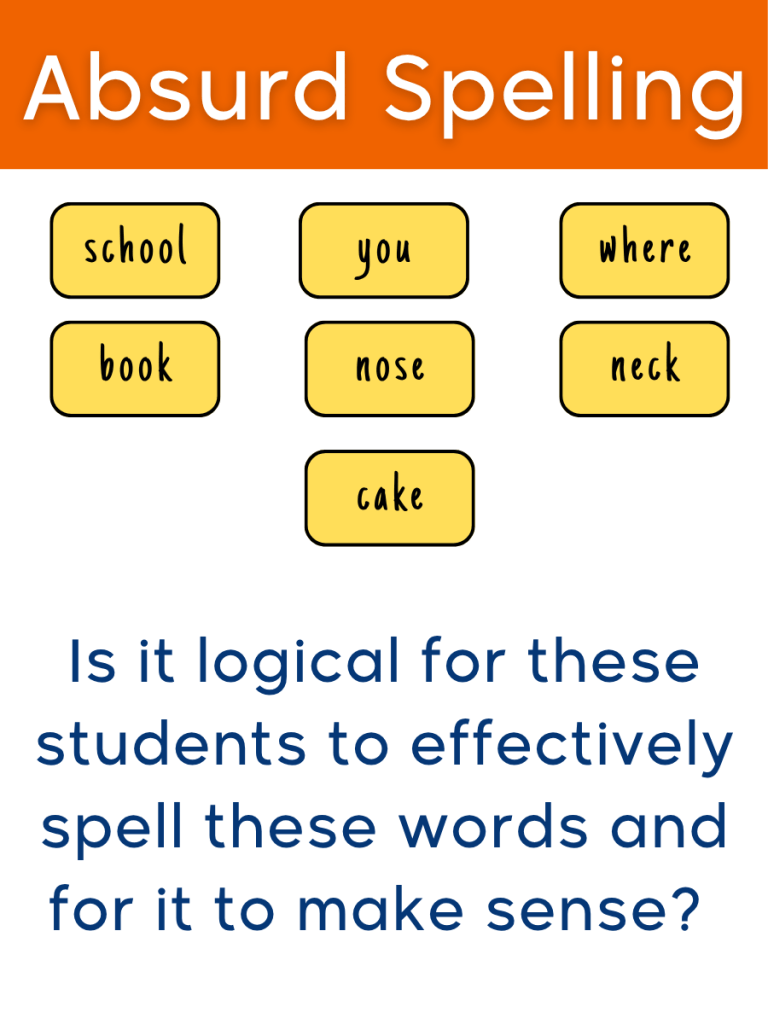
When we ask students to identify the position of /b/ in bat, rabbit and cab, essentially, we are checking to ensure that students can hear the sound position of /b/ in different words regardless of the length of words. It doesn’t matter at an early stage if they are unable to spell these words. The skill that we want to make sure they have mastered is isolating the sound position. Later this will be the next skill that will help them to spell words without rote spelling. That’s right—the decades-old spelling habits of sending home a list of 5-10 words each week for students to practise spelling without the ability to even map the sounds to its letter. Take for instance a K2 (Age 4) student being sent home with the following words: school, you, where, book, nose, neck and cake. Is it logical for these students to effectively spell these words and for it to make sense?
At this age, they have not been taught that phoneme /k/ can spell: k, c, ch, ck or even ke. So can we expect our little learners to spell the code they have not yet learnt? Will most of your students be able to explain why each word spells the way it does, or will they even remember how to spell these very words 3 weeks later? This is why mastering sound isolation and mapping the sound in its sound position is important. Later, it helps students to correctly spell words without relying on rote memory, eliminate the chaos, reduce the stress and frustration for both students and parents, and promote real spelling milestones.
Are my students blending words?
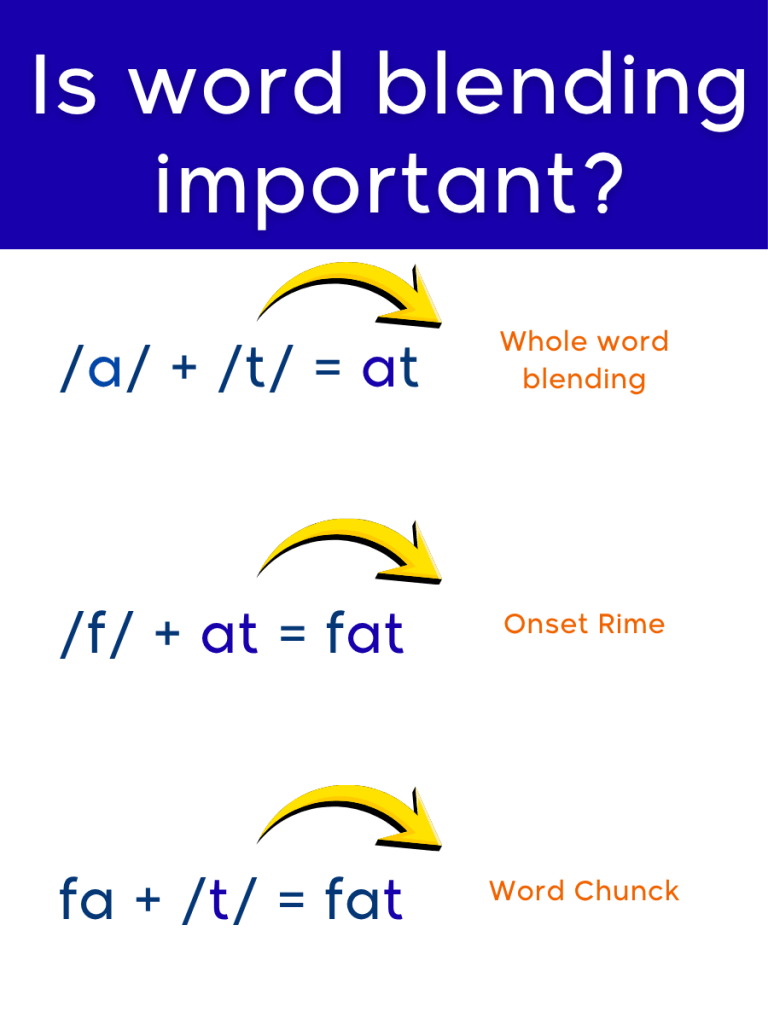
If you have never asked yourself this question, then take a moment to do so. Are your students blending words? If not, did you teach them enough blending techniques to help them connect sounds to make words? A student might have very well mastered knowing their sounds and the letters that make these sounds but cannot read a simple 2-letter word such as at because they do not know how to blend words for it to stick.
For some students we might even need to facilitate other blending techniques besides the most frequently used one—whole word blending. Students are generally taught to decode /a/+/t/=at, but the problem is, with this method, some little learners cannot make the connection in one go; they need differentiated instructions to help them hear both the sounds sticking together to hear the word at. It might require teachers to use the successive blending technique to stretch the vowel as long as possible with the student until they can pull the consonant to it, for the students to literally hear them together.
Sound substitution, deletion, and addition
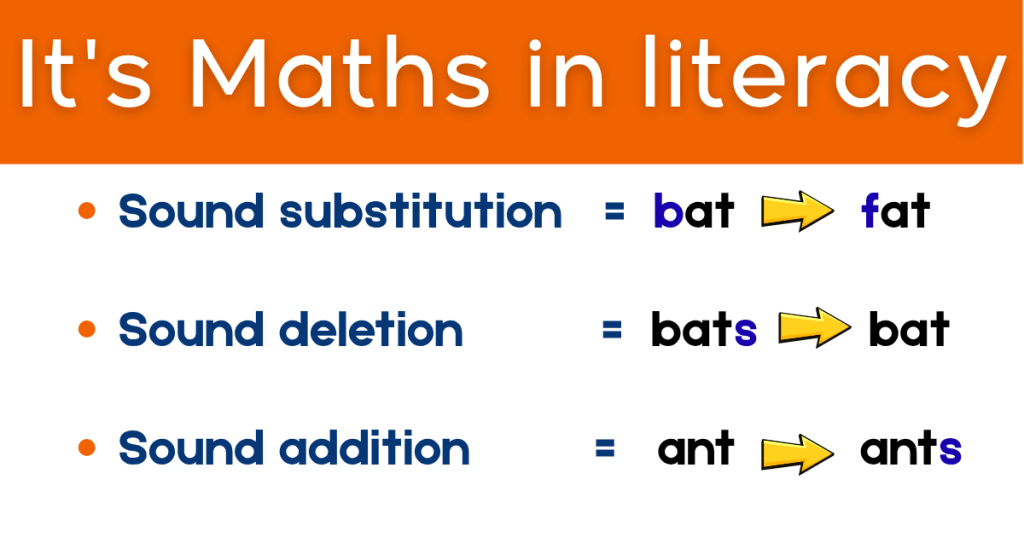
It’s Maths in literacy, but no worries, we should remember reading is a code that needs to be unwound in its various components and we are just at the beginning. Now that we have our students learning the phonemes, mapping them to their graphemes, and isolating the position of these phonemes, it is time to make sure we have them STREAM it by manipulating these sounds.
Sound substitution—rhyme time!
This is very familiar; you have been doing it all along. After your students have started blending simple two and three letter words, we can introduce initial sound substitution. Take for instance the word bat. If your students can independently decode the word bat, ask them, what would happen if you were to replace the /b/ in bat with /f/? This activity is best introduced audio visually as a whole class drill for checks and balances.
We want to ensure that students obtain sufficient practice, go through multiple trials and errors, corrective practices and still remain motivated to try again over time. Once they can successfully decorate the new word through rhyme or whole word blending, then we continue to substitute new sounds until we are satisfied. Be bold, test their ability to apply this skill and make nonsense words.
For older students such as age 5 and 6, we could move on to final sound/letter substitutions and then medial. Here, we have created the ideal learning opportunities for students to manipulate sounds in a variety of positions for them to understand that once we change a sound then the grapheme changes, which results in a new word.
What is sound deletion?
When we remove a sound from a word, we change the word and its meaning. Take for instance bats. Remove the s from bats; what’s the new word? Does this change the meaning? If your students are able to tell you the new word is bat without sounding and blending the word, you have gone through multiple fundamental moving parts to decoding words. They are now moving closer or at the level of early literacy readiness, since they no longer need to decide each part from scratch. Now, should you ask them, “How is the word bats different from bat?”, and they are able to tell you that bats means many and bat is one, it means your students have gained another essential skill for Language Arts and Reading. Things are now making sense.
Why is sound addition important when deciding?
Similarly to sound deletion, sound addition is equally important. Not only does it allow us to ensure our students can manipulate sounds but also assess and apply how it changes words and help to bring about fluency. In the word ant, if we ask a child what happens when we add s at the end of the word, they should be able to tell you the new word is ants, and it makes it more than one. If you go a step further and ask the students what happens when p is placed at the beginning of the word, would they be able to tell you the new word is pants, and it changes the noun and its meaning altogether? Would they need to sound and blend each letter to tell you the new words, or would they be able to tell you by saying p+ants = pants or ant+s =ants? Each outcome tells us something unique and different. Both are milestones but one is more advanced. If your students have mastered the first, they are on their way to fluency, which is one more important skill that is needed for ultimate reading success.
Who thought that decoding words could be so much fun, engaging, and is made up of so many moving parts? We hope that you are as excited as us to experiment with these new or refreshed insights to help your little learners master decoding skills that will allow them to be reading ready by the time they reach grade one. If your students are struggling to read and spell, one or more of these early decoding skills might be lacking. If left underdeveloped, these students will likely continue to struggle until they are addressed.
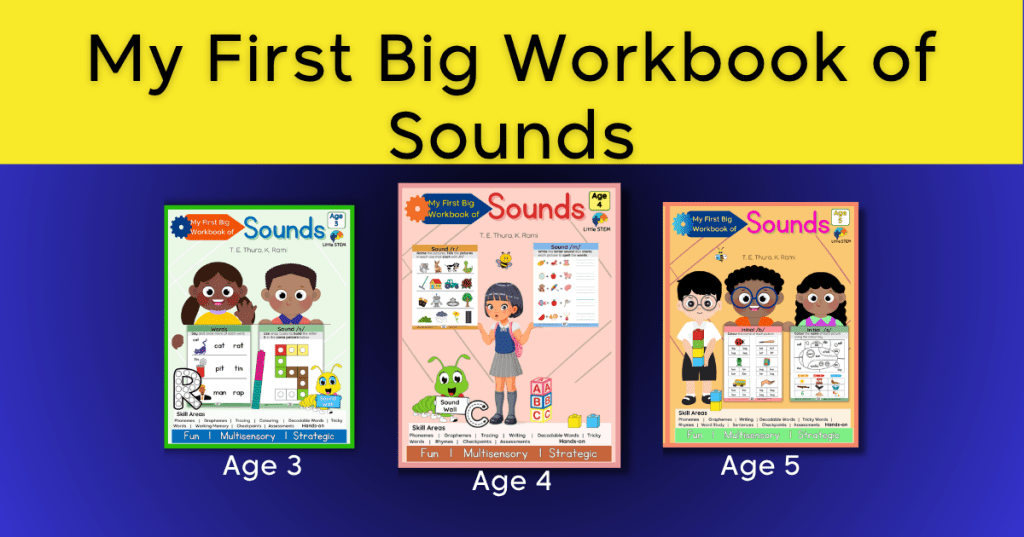
By now, it might have crossed your mind: Where do I get workbooks and resources to help my students master these skills with little or no teacher prep? Right here! We’ve got you covered with My First Big Workbook of Sounds series. These workbooks are designed to help students, ages 3-5, master each moving part to successfully master decoding skills by introducing sounds to graphemes, sound isolation, mapping, sound positioning, and decoding words, explicitly layered with multiple fun STREAM activities to help students make these concepts stick.
Order from us directly or visit our partner bookstores.